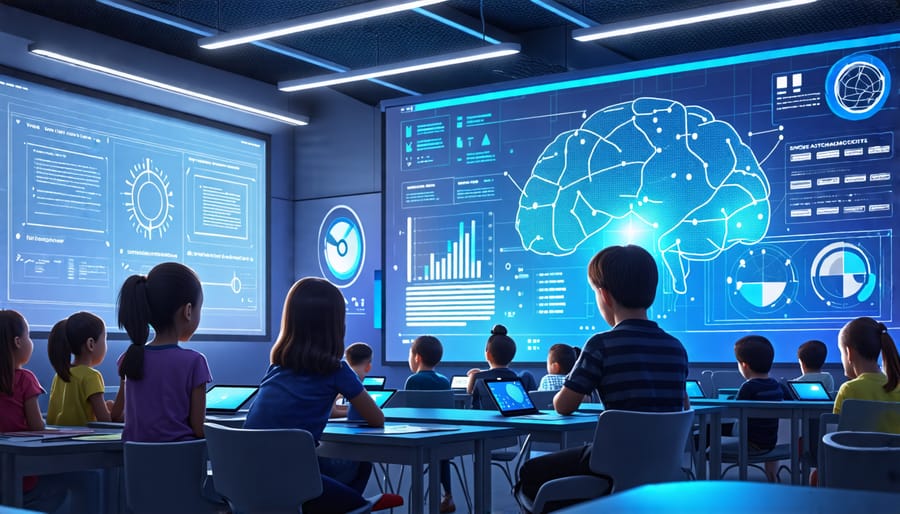
Casal dels Infants – AI can revolutionize teaching by transforming how educators deliver content, engage with students, and streamline administrative tasks. On January 24th, as part of the International Education Day celebrations, a special masterclass brought together experts and teachers from around the world to explore the growing role of AI in education. The session provided a platform for reflecting on the integration of AI into classrooms and how it can empower both educators and students to meet the challenges of the future. The discussions focused on how AI can enhance teaching practices, foster digital literacy, and promote ethical technology use in educational environments.
Professor Mutlu Cukurova from University College London opened the discussion by highlighting the increasing role of AI in society and its growing impact on education. He explained that AI tools can assist teachers by creating content, developing activities, and simplifying administrative tasks. This can significantly improve the efficiency of educators, allowing them more time to focus on student interaction and personalized teaching. According to Cukurova, when AI is used optimally, both teachers and students can benefit from improved learning outcomes and the development of essential skills.
However, he also emphasized the need for teachers to remain critical of the content generated by AI. Ensuring the accuracy and quality of AI-produced material is essential. UNESCO’s focus on teacher training and adapting teaching practices was discussed as a priority to ensure the effective integration of AI while maintaining educational standards.
“Read about: Shocking! This Education Program Drastically Boosts Social Equality ,Find Out How!”
During the masterclass, participants raised concerns about the challenges of implementing AI in underserved regions. One of the main issues highlighted was the lack of access to technology and resources, which can hinder the adoption of AI in classrooms. Experts pointed out that while AI holds the potential to enhance education globally, the success of AI tools depends on ensuring that educators receive proper training and that schools have the necessary infrastructure in place.
Shana Vidal White, Director of CS Equity Initiatives at the Kapor Center, addressed these concerns, underscoring the need for equitable access to AI resources. While AI can revolutionize teaching by providing personalized support for students with disabilities, White noted that AI tools often struggle with understanding the cultural and linguistic diversity present in classrooms. AI systems may inadvertently marginalize linguistic minorities and fail to account for the richness of intercultural interactions. Human teachers, White argued, are essential in fostering an inclusive educational environment that AI cannot replicate.
Shitanshu Mishra, Chief of Digital Learning, AI, and IT at UNESCO MGIEP, focused on the ethical considerations of using AI in education. He highlighted that the ethics of AI in education are distinct from the broader ethics of AI technology. Mishra stressed the need for global cooperation to ensure the ethical use of AI, advocating for harmonized ethical standards at the national level to minimize risks and address challenges associated with unregulated AI in education.
Teachers expressed concerns about the protection of student data and the potential for algorithmic bias in AI systems. Mishra emphasized the importance of providing teachers and students with the tools and skills needed to navigate these challenges responsibly. This approach would help ensure that educators use AI in a way that respects privacy and promotes equity in educational settings.
“Read more: Interpol Cracks Down on Global Human Trafficking Networks in Southeast Asia”
The masterclass concluded by emphasizing the importance of balancing technological innovation with ethical principles to ensure that AI can revolutionize teaching while preserving the human elements that are vital to effective education. AI should not replace teachers but rather collaborate with them to improve learning outcomes and foster critical thinking. The future of education lies in the intersection of human expertise and AI technology, where both can work together to create more dynamic, inclusive, and effective learning environments.
This event was organized with the support of the ENGIE Foundation and in collaboration with 6C Conseil. It highlighted the shared commitment to ensuring that AI in education benefits all students, regardless of their background, location, or challenges. As AI continues to evolve, it holds the potential to shape the future of education, making it more accessible, equitable, and responsive to the needs of diverse learners worldwide.