Learning Mathematics, Should Kindergarten Children Be Taught It?
Casal dels Infants – Learning mathematics is one of the skills that can develop from an early age, alongside the potential that each child possesses. Some children excel in logical and mathematical reasoning, while others have talents in sports (kinesthetic), arts, language, interpersonal communication, or spatial intelligence. This potential grows rapidly between the ages of 0 and 10, a period known as the window of opportunity, during which children experience optimal development.
Understanding the window of opportunity is crucial in education, especially in shaping a generation of outstanding individuals. For example, a child with athletic talent needs early training to maximize their skills. The same applies to other fields, such as music, language, and mathematics. If the stimulation provided is inappropriate, a child’s potential development may be hindered.
“Continue Reading: Personality Determines Children’s Achievement”
Mathematical and logical abilities begin developing from birth and accelerate until the age of four. After that, their development tends to slow down. However, this does not mean that kindergarten children should be taught mathematics in a formal way, as it is in higher education levels. An overly academic approach could actually be harmful to their cognitive growth.
For instance, musical abilities develop rapidly from the age of three and decline after ten years. Similarly, language skills begin to develop in infancy but start to decrease after the age of six. Therefore, teaching methods should align with a child’s developmental stage to maximize their potential without applying unnecessary pressure.
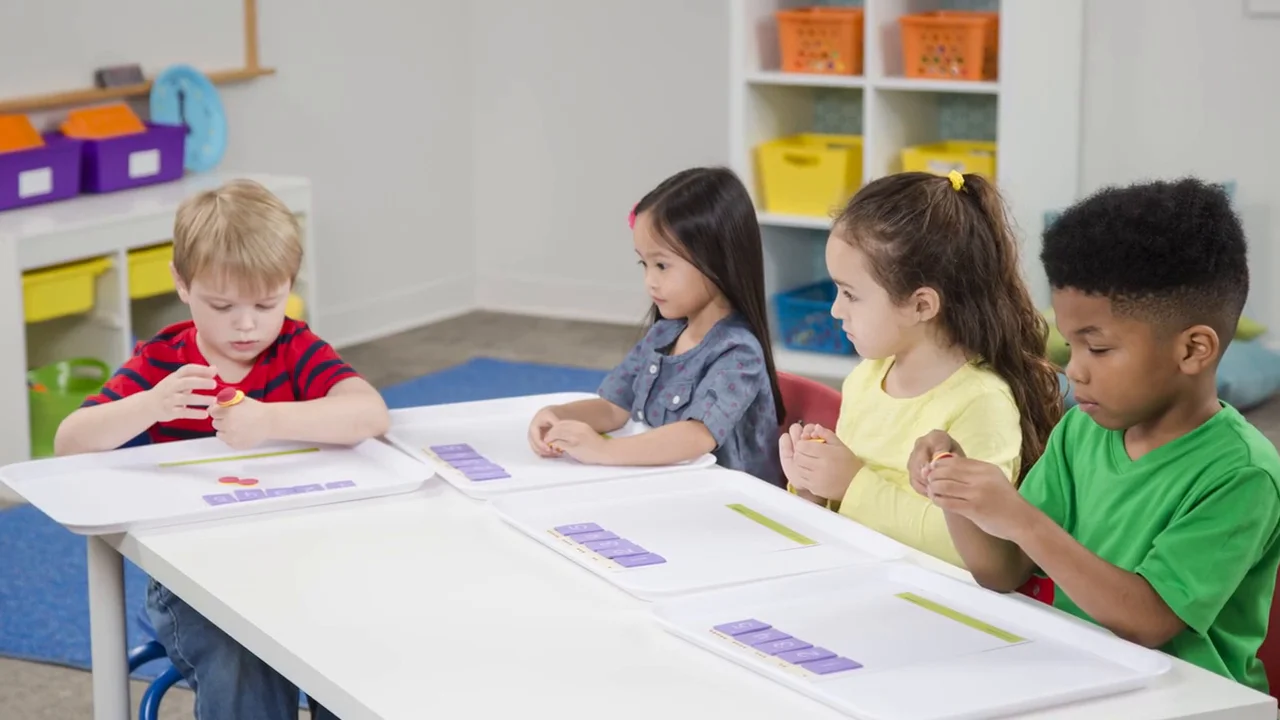
Kindergarten children do not need to be taught mathematics in a rigid academic manner. If taught incorrectly, it could lead to stress and even hinder brain development. Instead, children at this stage should be given opportunities to engage in educational play.
Kindergarten teachers should receive training on how to develop engaging and developmentally appropriate educational games. The focus should not be on specific subjects but rather on themes that incorporate various aspects, including science, language, mathematics, music, movement, and drama.
Not every child needs to become a mathematics expert. A nation requires excellent human resources in various fields, including teachers, presenters, designers, programmers, musicians, athletes, politicians, researchers, entrepreneurs, and even content creators. By allowing children to develop according to their natural talents, they will grow into creative, innovative, and critical thinkers.
“Read More: Simple Habits That Can Make Life Happier”
Casal dels Infants - a pilot program launched this week in Barcelona aims to equip children and their families with…
Casal dels Infants - a pilot program in Jakarta has reduced school dropout rates by 22% among participating families, according…
Casal dels Infants - Community centers across Europe are quietly rewriting the rules of early learning, and the numbers behind…
Casal dels Infants - Over 67% of internationally funded child welfare interventions lose momentum within three years when local stakeholders…
Casal dels Infants - Data from the UNICEF State of the World's Children 2024 report reveals a startling disconnect in…
Casal dels Infants - Recent data from UNICEF indicates a 15% surge in anxiety among adolescents globally, revealing that academic…