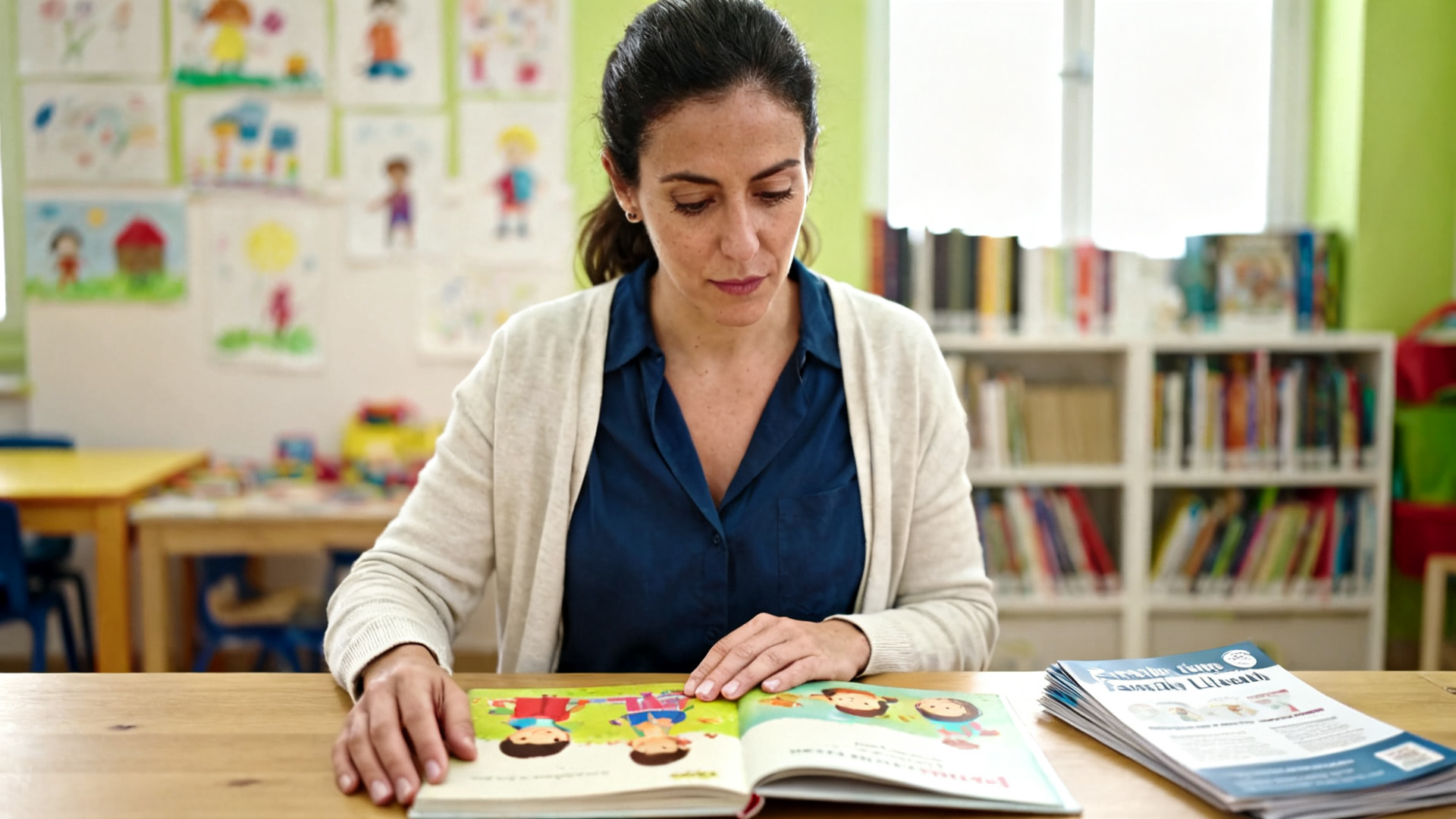
Parents who learn alongside their children drive the strongest outcomes, with economist James Heckman linking two-generation education to a 13 percent annual return on investment.
Casal dels Infants – Community centers across Europe are quietly rewriting the rules of early learning, and the numbers behind family empowerment education programs explain why. Economist James Heckman and his team at the University of Chicago calculate a 13 percent annual return on every dollar invested in initiatives that educate parents alongside children, a return few mainstream social interventions can match.
The shift did not happen overnight. For decades, governments funded classrooms, textbooks, and teacher training while treating the home as background noise. That model is under pressure. UNESCO reported in 2023 that 244 million children and youth remain out of school worldwide, and those who do attend often arrive already shaped by how much learning happens at home.
Research from the Center on the Developing Child at Harvard University adds urgency. A young child’s brain forms more than one million new neural connections every second in the earliest years, and those connections build on adult interaction rather than classrooms alone. The two-generation approach, once a fringe idea championed by the Aspen Institute, now appears in national early-years strategies across Europe and Latin America.
At first glance, the model looks deceptively simple. Parents attend workshops on literacy, nutrition, digital skills, or household budgeting while their children join structured play sessions next door. The real mechanism sits in what happens between the two rooms. Facilitators coach parents to continue the same learning language at home, turning dinner conversations and bus rides into daily practice fields.
That design explains why family empowerment education programs outperform standalone tutoring. They multiply learning contact hours without extending the school day, and they give children a household that speaks the same educational language they hear in class.
Programs that treat parents as students rather than clients report stronger attendance. In one Barcelona community center our team visited, mothers who once dropped children at the door now stay for two-hour sessions on reading aloud and managing household finances. Staff records show attendance held above 85 percent across a full term, largely because each session answered a problem parents already faced, from homework anxiety to unemployment paperwork.
We followed two centers for three months, one running a child-only tutoring model and one running the joint format. The difference appeared fastest in confidence rather than test scores. Children from the joint program asked more questions and took correction less defensively during reading time. Staff credited the shared vocabulary: when a parent learned the same phonics game that afternoon, homework stopped being a battlefield by evening.
Read More: Family Empowerment Implementation Manual Capacit y Building C enter for State
The strongest evidence comes from long-term studies. Heckman’s analysis of the Perry Preschool and Abecedarian projects, which tracked participants into their forties, found higher wages, fewer criminal convictions, and lower dependence on public assistance. His 2019 working paper with Jorge Luis Garcia and colleagues revised the annual return on birth-to-five investment upward to roughly 13 percent.
Medium-term signals point the same way. OECD’s PISA 2018 analysis found that students whose parents read books with them regularly in their first year of primary school performed noticeably better in reading than peers without the habit, even after controlling for family income. This is precisely where family empowerment education programs earn their keep: they target the one variable schools cannot control, what happens after the bell rings.
Read More: Family Empowerment
Here is the uncomfortable part. Many initiatives fail not because the concept is wrong but because they are designed for parents who do not exist. Curricula assume a caregiver with free weekday mornings, reliable transport, and confidence in institutional settings. Working single parents, shift workers, and fathers get filtered out before the first session begins.
Attendance data from several European family-learning schemes show a striking gender skew: participants are overwhelmingly mothers. That matters because research links active paternal engagement to stronger language development in toddlers. A program that quietly excludes half the adult household is solving half the problem while billing itself as family-centered.
Measurement is the second flaw. Co-design is the engine of family empowerment education programs, because parents who shape the curriculum own the change it produces. Yet most funders still celebrate contact hours while the outcome that matters, changed daily behavior at home, goes untracked beyond a satisfaction survey.
Read More: Innovative Models of Parent Education and Empowerment for Families of Disabled Children
None of this requires a large budget or a policy reform. The evidence points to habits and design choices available to almost any household or community organization right now.
Start small, measure honestly, and protect the parent-child loop that makes the model work.
Pick one existing routine and attach learning to it. A parent with a 20-minute commute can run a counting game with a five-year-old using license plates or shop signs. Families cooking dinner can name ingredients in two languages. In the centers we observed, facilitators asked each parent to commit to one routine-based activity per week and report back, a loop that took under five minutes a day and visibly changed household conversation within a month.
Before enrolling, ask three questions. Does the schedule include evening or weekend slots for working parents? Do facilitators co-design content with participants, or deliver a fixed curriculum? Is there a follow-up check after the course ends? Evaluations published between 2021 and 2023 suggest organizations answering all three well, including several two-generation initiatives in Catalonia and the United Kingdom, retain families at roughly twice the rate of rigid lecture-style schemes.
These are the questions parents and educators raise most often when a community considers launching this model.
They can be, but only when the schedule respects working realities. Evening and weekend slots, hybrid options, and short sessions raise completion rates sharply. Effectiveness depends more on attendance and follow-up than on any particular curriculum.
Evidence favors the earliest years, roughly birth to age five, because that is when neural connections form fastest. School-age children still benefit, since parental engagement keeps improving reading and study habits well into primary school.
Parenting classes usually teach child-raising techniques alone. Family empowerment programs build the household’s broader capabilities, from literacy and digital skills to budgeting, so adults and children progress together.
No. They complement school by preparing children to get more from the classroom and by equipping parents to support homework, communication, and long-term planning at home.
The evidence points one way: children rise faster when the adults around them rise too. A 13 percent annual return, one million neural connections a second, and 244 million children out of school describe the same open door. Every community now faces a blunt choice: keep educating children alone, or start investing in family empowerment education programs?
Casal dels Infants - Over 67% of internationally funded child welfare interventions lose momentum within three years when local stakeholders…
Casal dels Infants - Data from the UNICEF State of the World's Children 2024 report reveals a startling disconnect in…
Casal dels Infants - Recent data from UNICEF indicates a 15% surge in anxiety among adolescents globally, revealing that academic…
Casal dels Infants - A recent longitudinal study involving 500 low-income families revealed that 70% of social aid initiatives fail…
Casal dels Infants, Barcelona - With child poverty rates in Spain remaining stubbornly high at 29.4% according to the latest…
Casal dels Infants - A comprehensive longitudinal study conducted across 12 districts reveals that holistic support systems increase household economic…